
Assess Once, Comply to Many


Clear Applicability and Scope
Determine whether the CCPA applies and which additional requirements - privacy risk assessments, ADMT requirements, or cybersecurity audits - are triggered by the organization’s data processing, business model, and scale.

Evidence-Based Privacy Validation
Test applicable notices, consumer-rights workflows, sale/sharing opt-outs, sensitive personal information controls, opt-out preference signals, retention practices, service-provider/contractor/third-party governance, and supporting technical evidence rather than relying on policy review alone.

Integrated Privacy Risk Assessment
Where Article 10 is triggered, evaluate the covered processing, benefits, negative privacy impacts, safeguards, processing decision, required approvals, lifecycle requirements, and applicable CalPrivacy submission information as part of the same engagement.

Evidence Reuse Across Frameworks
Reuse applicable evidence from PCI DSS, ISO 27001, SOC 2, NIST CSF 2.0, GDPR, and other programs through ControlCase One Audit™, while maintaining CCPA-specific conclusions and deliverables.

What is the CCPA/CPRA?
The regulations effective January 1, 2026, implement three important risk-based areas: privacy risk assessments for specified significant-risk processing; annual cybersecurity audits for businesses meeting the Article 9 thresholds; and pre-use notice, access, and opt-out requirements for businesses using ADMT to make significant decisions, subject to applicable exceptions. ADMT compliance begins January 1, 2027. These requirements apply only when their specific triggers are met.
Who Should Consider a CCPA/CPRA Assessment?
- For-profit organizations doing business in California that meet, or may meet, a CCPA business threshold.
- Organizations processing personal information of California customers, employees, job applicants, independent contractors, or business contacts and needing to validate operational compliance.
- Businesses that sell or share personal information, process sensitive personal information, use ad-tech or profiling, use ADMT for significant decisions, or rely on complex service-provider and third-party ecosystems.
- Organizations preparing for a CCPA privacy risk assessment or for the phased annual cybersecurity audit requirement.
Why Choose ControlCase for CCPA/CPRA Assessment?
What Does the Integrated CCPA/CPRA Assessment Cover?
Entity thresholds, roles, accountability, data-level exemptions, policies, training, records, and governance.
PI/SPI inventories, data flows, purpose limitation, reasonable necessity/proportionality, minimization, and retention.
Notice at Collection, privacy policy, rights to know, delete, correct, limit (where applicable), and non-discrimination.
Do Not Sell or Share mechanisms, Global Privacy Control / other qualifying opt-out preference signals, status display, consent and financial-incentive interactions.
Required contracts, use restrictions, due diligence, monitoring/verification rights, downstream obligations, and vendor oversight.
Security governance and safeguards relevant to personal information; identify whether the separate Article 9 cybersecurity-audit trigger applies.
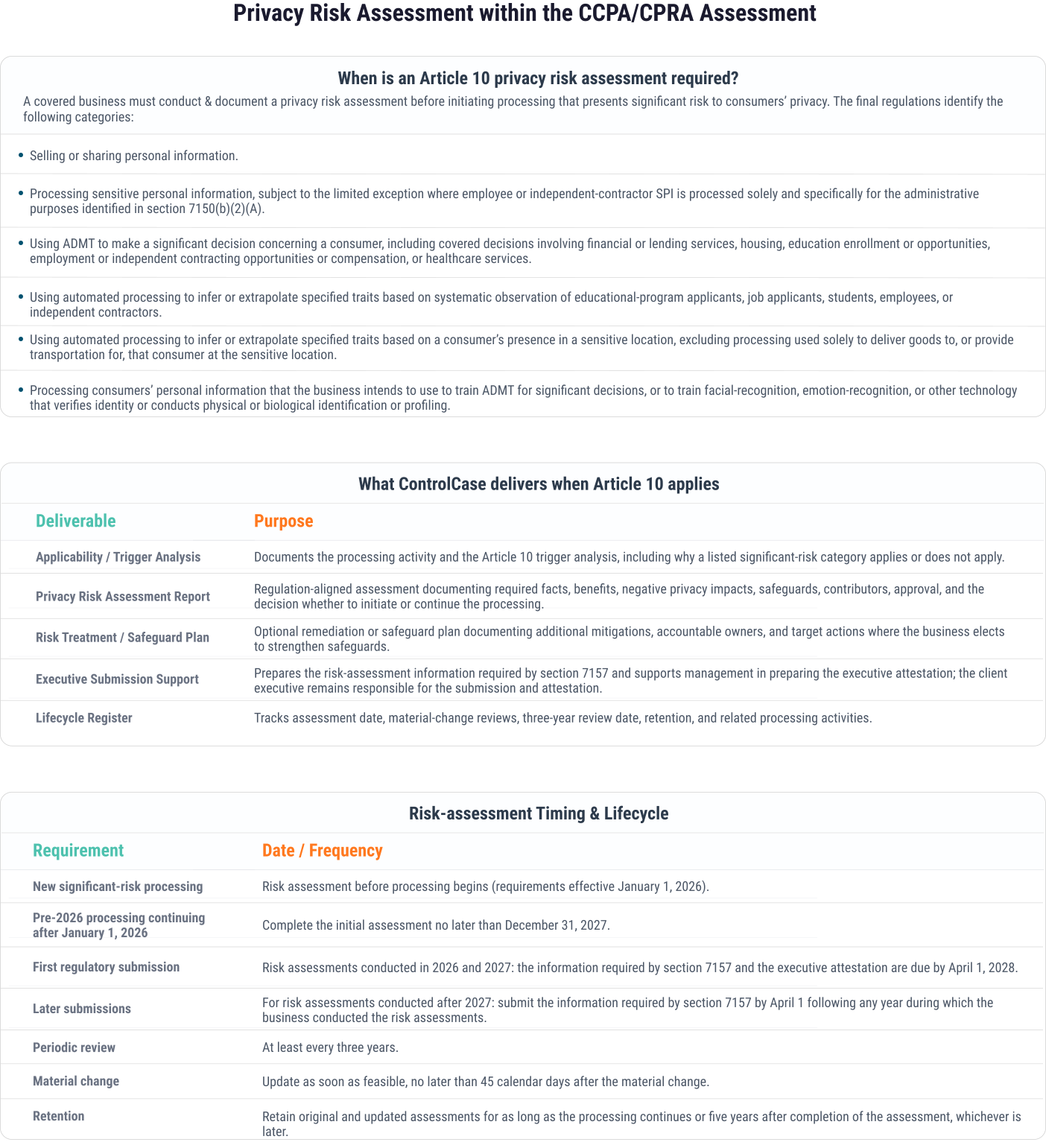
Identify Article 10 triggers and, when required, assess processing purpose, minimum PI necessary, operations, retention, consumers affected, disclosures, benefits, negative privacy impacts, safeguards, contributors, approval, processing decision, and lifecycle/submission requirements.
Identify qualifying ADMT used to make significant decisions and assess pre-use notice, access, opt-out (subject to regulatory exceptions), appeal where applicable, linked risk-assessment, and related requirements.
ControlCase Integrated CCPA/CPRA Assessment Process